
Scale is one of the most powerful tools in environment concept art, yet it is often treated as a purely technical decision.
In practice, scale is emotional.
By adjusting the relationship between a structure and its surrounding landscape, an environment can communicate vulnerability, dominance, abandonment or resilience without relying on characters or explicit narrative.
This study builds on the idea that environments are not neutral spaces. They shape how a story is felt before it is understood
Scale as an Emotional Device
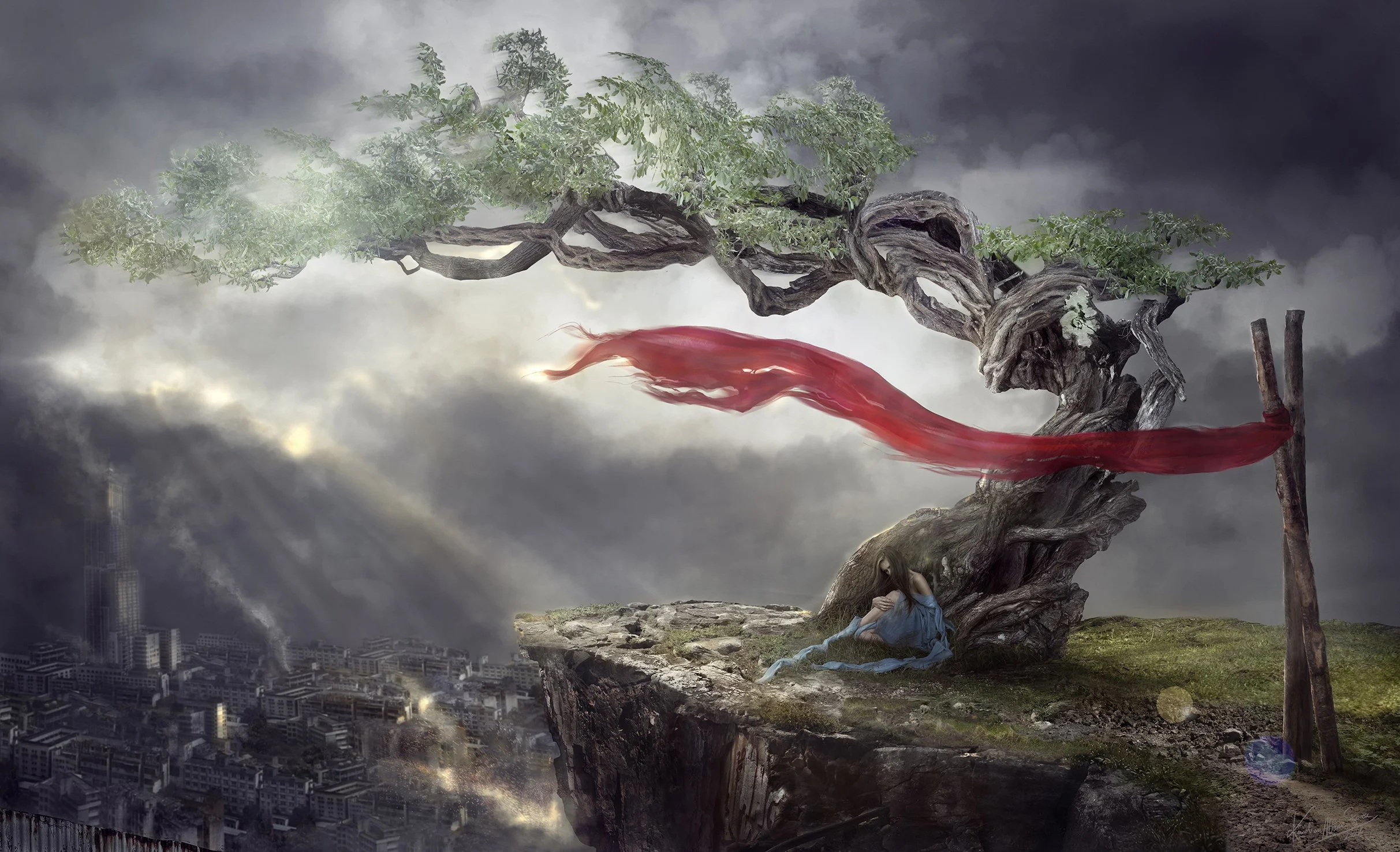
In this image, scale does not function as a simple contrast between small and large forms. Instead, it establishes a separation between different experiential worlds.
The city in the background is vast, dense and heavy, yet visually subdued. It exists as mass rather than place. In contrast, the tree and the figure occupy a contained, elevated space where material, gesture and movement remain readable and intimate. This is not a hierarchy of importance but a division of realities.
Scale here operates as distance. Not physical distance alone, but emotional and existential distance. The viewer is invited to recognise that these spaces do not communicate easily with one another, even though they coexist within the same frame. In environment storytelling, this kind of scaled separation allows an image to express tension between inner experience and external systems without explicit narrative cues.
Scale in concept art functions as a potent emotional device, shaping how viewers relate to a scene and its narrative stakes; by manipulating the relative sizes of figures, objects and environments an artist can evoke awe, vulnerability, intimacy or alienation towering structures and vast vistas amplify insignificance and wonder, while cramped interiors and exaggeratedly small details intensify claustrophobia or focus attention on personal, tactile experience. Scale also guides temporal perception and memory: monumental forms suggest endurance and mythic time, whereas minute, fragile elements imply transience and intimacy. Thoughtful contrast in scale creates dramatic tension and visual rhythm, leading the eye and eliciting an emotional response before any explicit story is told; ultimately, scale is not merely a technical measure but a narrative choice that encodes mood, power dynamics and psychological perspective into the image itself.
Isolation Without Emptiness
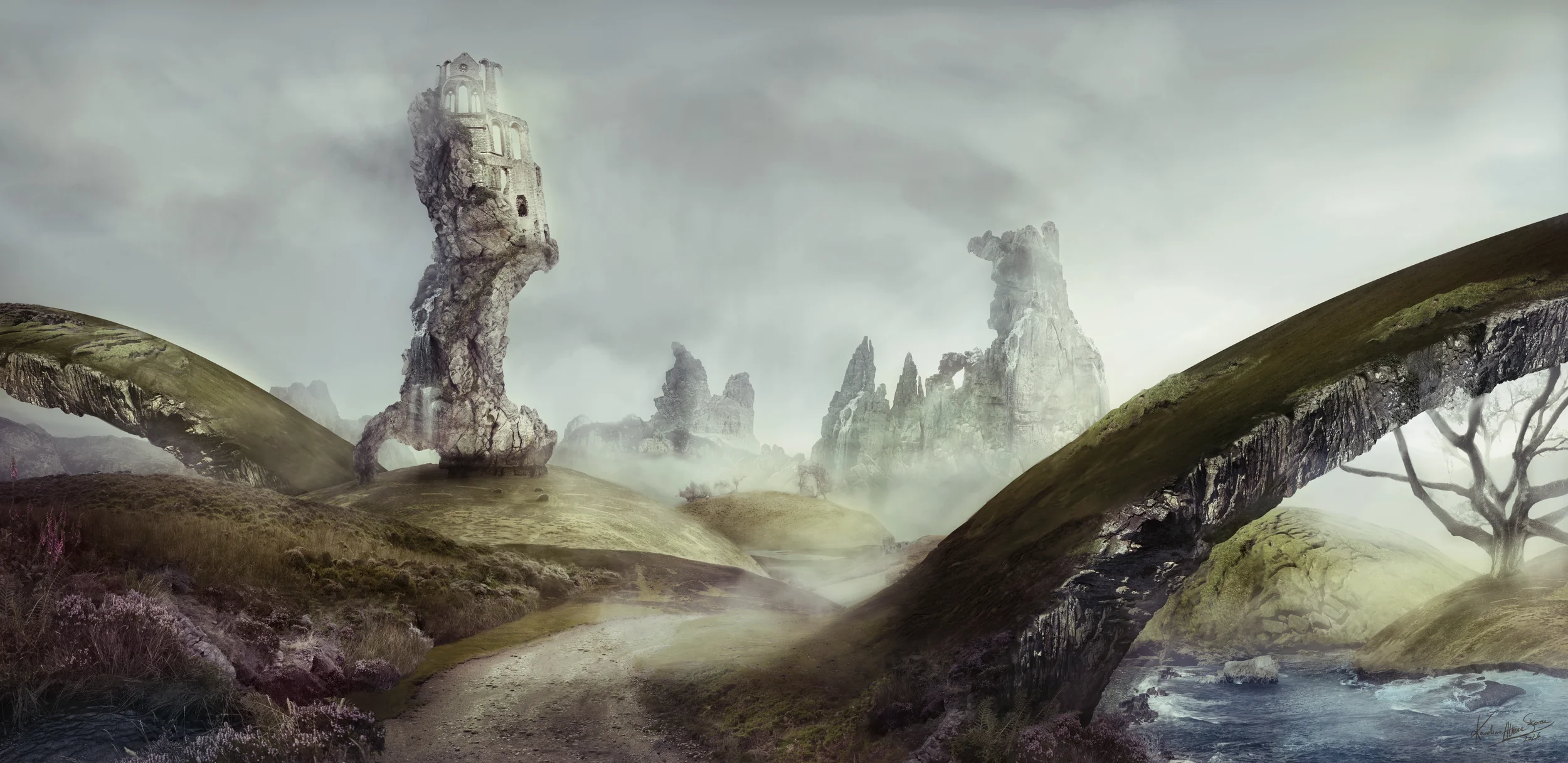
Isolation does not require emptiness. The landscape in this image is dense, textured, and visually active. Yet the structure feels isolated because nothing around it offers support, protection, or continuity.
Isolation in environment concept art is often created through:
– lack of pathways or visible connections
– fractured ground or interrupted terrain
– negative space that separates rather than frames
– lighting that emphasises exposure rather than shelter
These elements work together to create emotional distance, not physical emptiness.
Why Characters Are Not Always Necessary
Characters often provide instant narrative clarity. They also close interpretive space. By removing characters, the environment becomes the primary storyteller. The viewer is no longer observing someone else’s experience but mentally inhabiting the space themselves. This approach is particularly effective in concept art for games and films where environments are meant to carry mood, history, and psychological weight across multiple scenes.
The question shifts from what is happening? to what does this place feel like?
Designing Emotional Space
Emotional space is not created through detail alone. It emerges from relationships: size, distance, proportion, and contrast. In this work, scale and isolation function together to create a space that feels tense but quiet. The environment does not demand attention. It waits. Strong environment concept art often behaves this way. It does not explain itself. It allows the viewer to arrive emotionally before they arrive intellectually.
Concept Art Beyond Illustration
Environment concept art sits between design and storytelling. Its role is not to decorate a narrative but to shape how that narrative is perceived. By treating scale and isolation as emotional tools rather than technical constraints, environments can communicate complex states such as loss, endurance, or uncertainty without explicit storytelling devices. This is where concept art becomes a form of visual thinking.
