
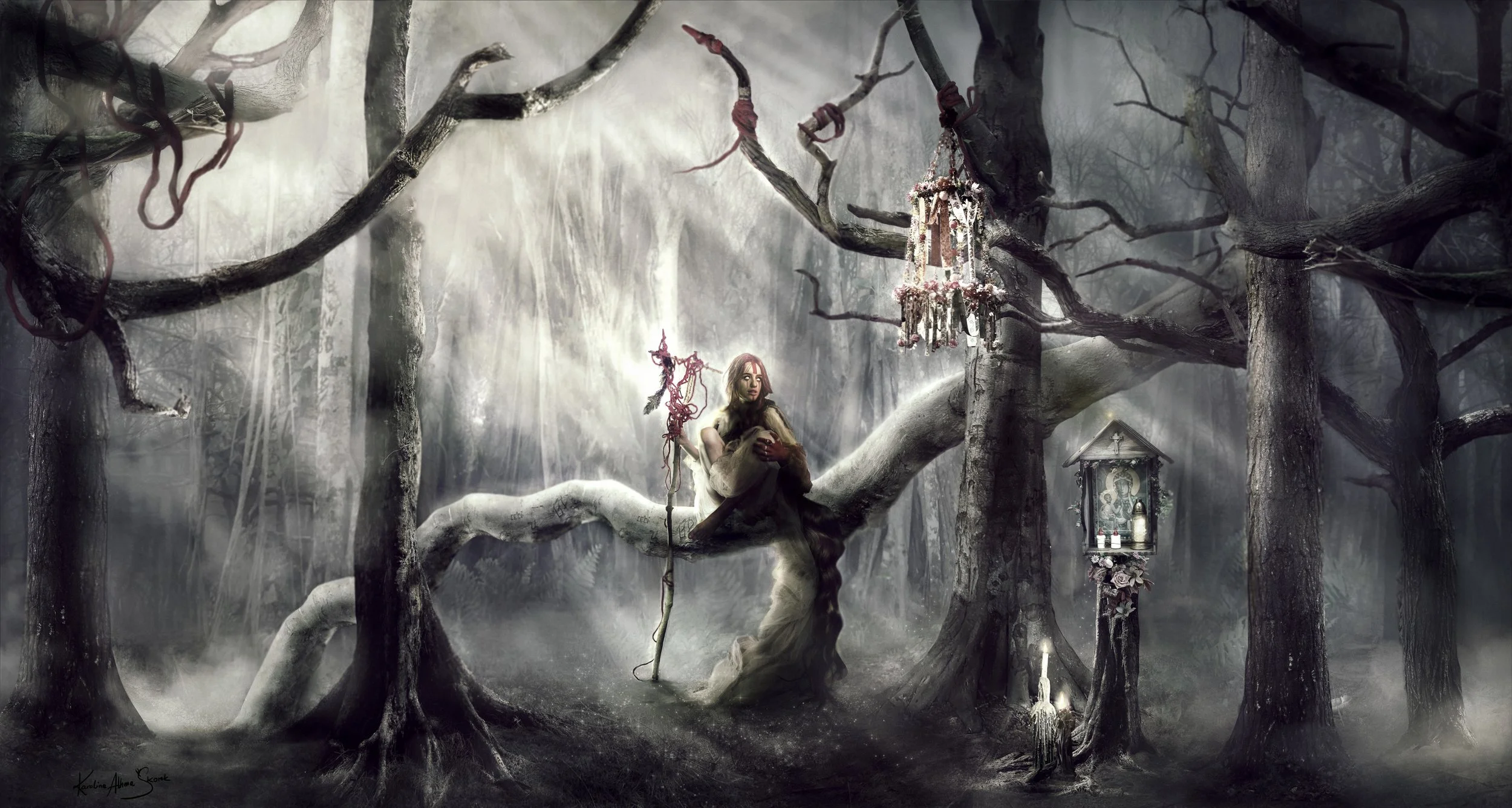
The Keeper – Concept Art Process & YouTube Speedpainting
“The Keeper” is a character-driven concept art piece developed as part of my ongoing exploration of ritual, memory and psychological landscapes.
In this YouTube speedpainting, I document the full digital painting process – from rough value blocking to atmospheric rendering and final detailing. The piece focuses on emotional storytelling through environment, material texture and restrained colour.
Rather than treating the speedpaint as simple time-lapse content, I approach these recordings as process documentation. They reveal how composition evolves, how light defines hierarchy, and how narrative tension is built through subtle spatial decisions.
The Keeper sits at the intersection of fine art and production design. The character design integrates symbolic elements, costume texture and environmental storytelling to suggest a larger unseen world.
You can watch the full digital painting process below.
The Keeper - Digital Painting Process in Photoshop
“The Keeper” was developed entirely in Adobe Photoshop as part of my ongoing exploration of character-driven concept art.
This piece began not with detail, but with structure. I always start with value composition. Before colour, before texture, before narrative embellishment, the image has to work in grayscale. Light defines hierarchy. If the eye does not know where to rest, the image collapses.
1. Value Blocking
The first stage focused on large tonal masses. I avoid early detail. At this stage I am only asking:
– Where is the visual weight?
– What is the focal hierarchy?
– Does the silhouette read?
Photoshop tools used:
Large textured brushes
Layer masks for non-destructive adjustments
Adjustment layers for contrast control
2. Colour and Atmosphere
Once the value structure stabilised, I introduced colour through gradient maps and soft overlay layers. I rarely paint colour directly at first. I build atmosphere. Subtle desaturation keeps the emotional tone restrained. This piece required tension, not spectacle.
3. Material and Texture
Detail is always last. Skin texture, fabric grain, subtle environmental particles were added using custom brushes and controlled opacity passes. At this stage, restraint is crucial. Over-rendering destroys mood.
4. Final Pass
The final adjustments involved:
Localised dodge and burn
Edge sharpening in focal areas
Slight atmospheric haze to maintain depth
The full process is documented in the speedpainting below, but what interests me most is not speed. It is structure. Digital painting is not about effects. It is about decision-making.
