
We often think of landscape as background. A setting. A stage where something happens.
But sometimes nothing needs to happen. Sometimes the landscape itself is the emotional event.
In my recent work, I have been exploring landscape not as narrative scenery, but as an affective environment. An image can function as a container rather than a story. It can hold ambiguity, suspension, memory, tension without resolving them. Instead of asking “What is happening here?”, I have been more interested in asking, “What does this space feel like to inhabit?”
That shift changes everything.
Stillness as Structure
Many of my earlier works leaned heavily into world-building and cinematic composition. Light beams, dramatic scale, mythic figures. They were built to be entered as narrative worlds.
Recently, I’ve been pulling back.
Stillness is not emptiness. It is structure.
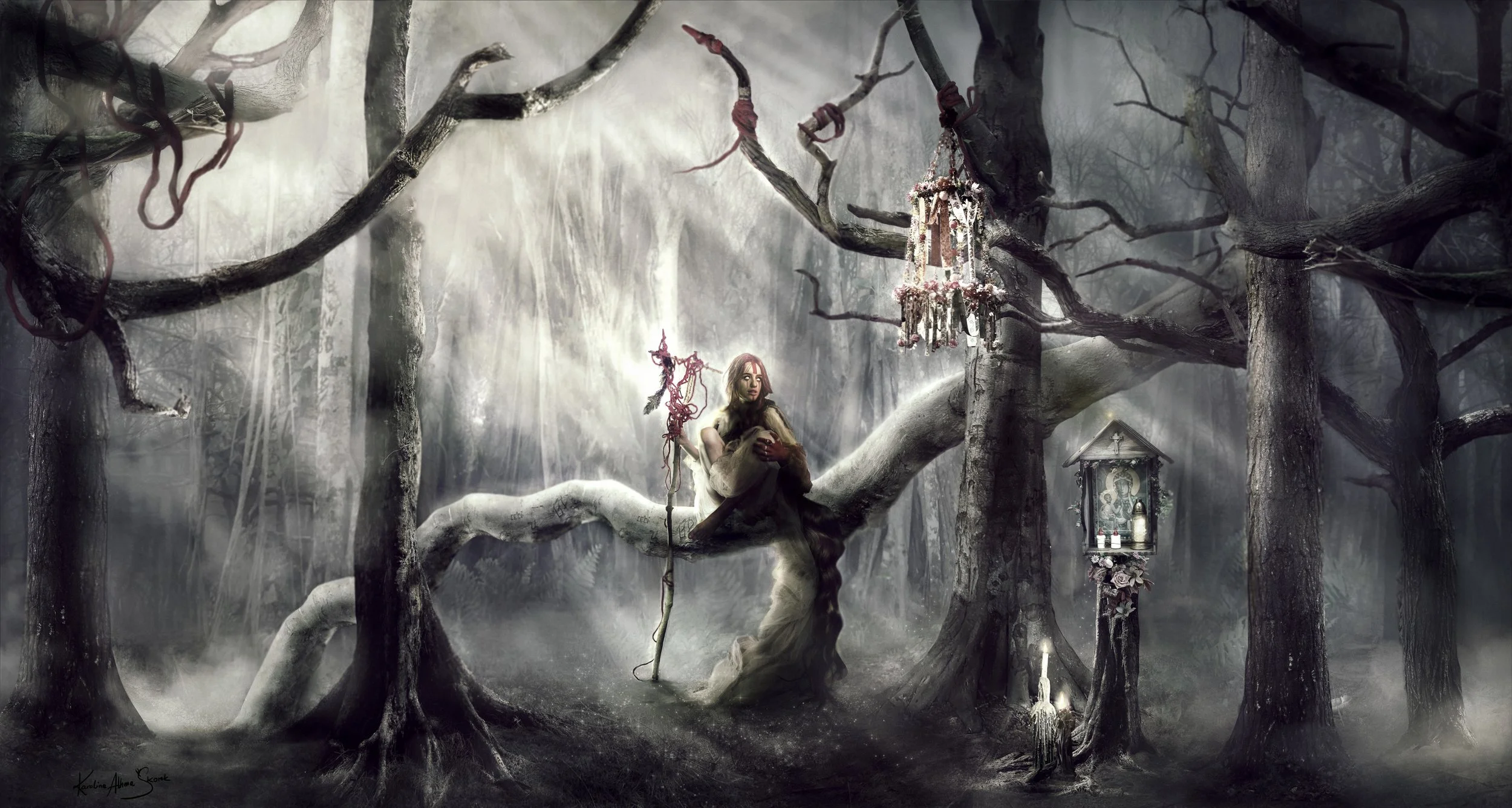
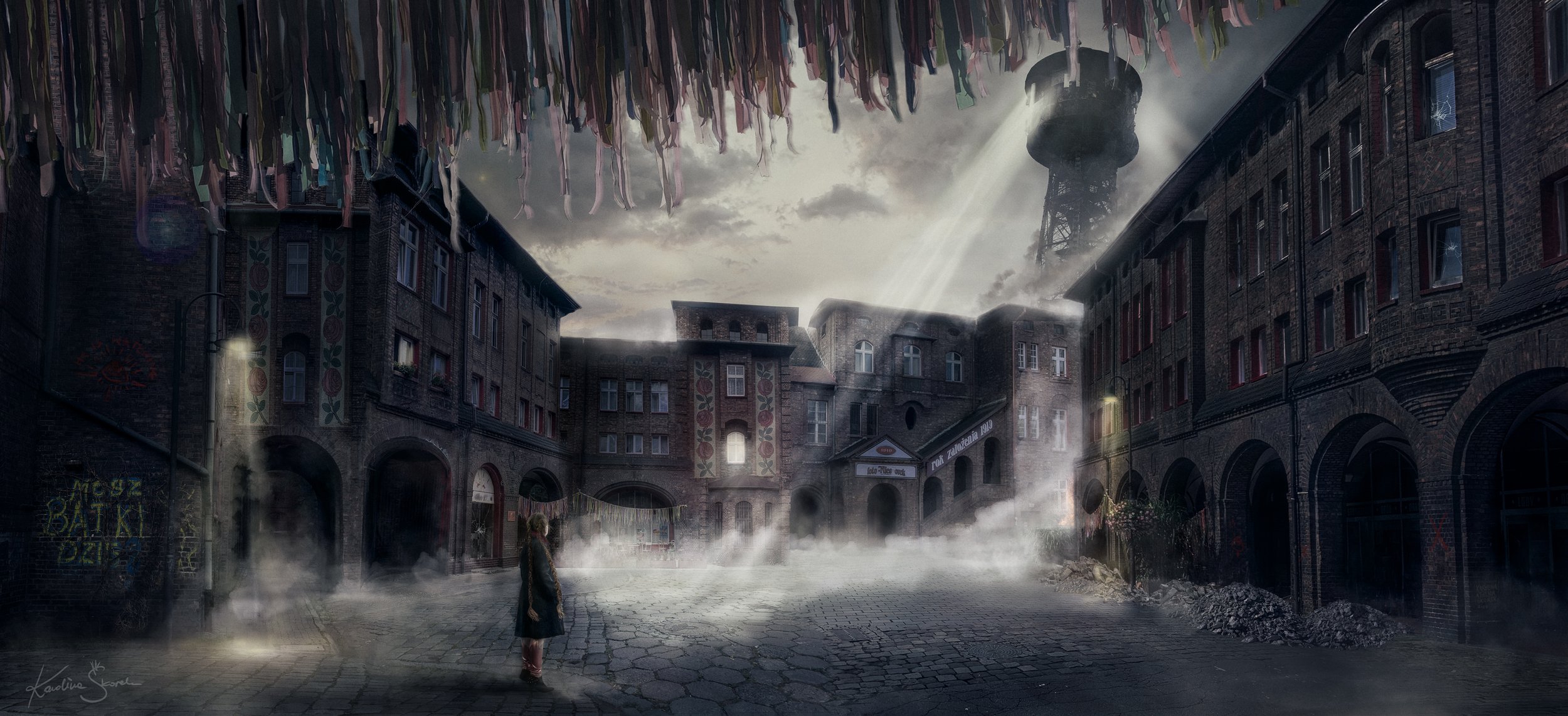
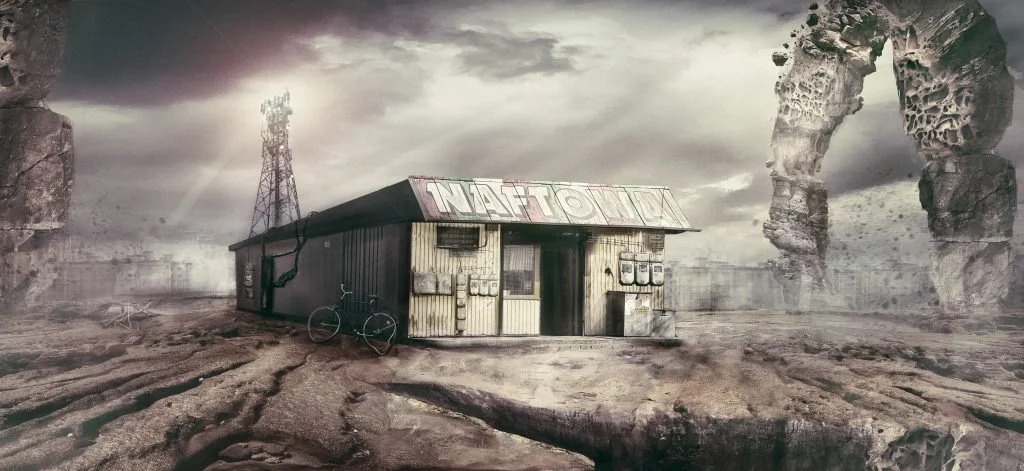
A solitary kiosk in a cracked landscape. An industrial courtyard suspended in mist. A shrine hanging quietly from a tree.
These spaces do not explain themselves. They do not provide a beginning or an end. Instead, they remain unresolved.
That unresolved quality is deliberate.
Psychologically, we are uncomfortable with ambiguity. We want closure. Narrative. Cause and effect. But when an image refuses to resolve, it creates a different kind of engagement. The viewer does not consume the story. The viewer occupies the tension.
Memory in the Ordinary
I am particularly interested in vernacular markers of memory. Informal shrines. Religious icons attached to trees. Banners strung between buildings. Everyday objects that carry quiet emotional weight.These elements are not monumental. They are not heroic. They are small gestures placed within space.
And yet they act as anchors.
They hold traces of personal and cultural memory. They suggest that something happened here, or continues to happen here, even if we do not see it. In that sense, the landscape becomes more than terrain. It becomes an archive.
Restraint Over Spectacle
There is a temptation in digital painting to escalate. More drama. More light. Bigger worlds. Stronger contrast. But spectacle often closes interpretation. Restraint, on the other hand, keeps the space open. When light is diffused rather than explosive, when figures are small or absent, when the environment is neither clearly safe nor clearly threatening, the image becomes a suspended field of possibility.
That suspension is where emotional engagement happens.
Not through shock.
Not through plot.
Through presence.
Landscape as Emotional Container
What interests me most is how constructed visual spaces can hold emotional states without illustrating them directly. Grief does not need a crying figure. Memory does not need a flashback.
Ambiguity does not need an explanation.
A cracked surface, a fog-filled courtyard, a lone building surrounded by silence – these can carry affect on their own.
In practice-based work, the making itself becomes a form of thinking. Adjusting scale, softening light, removing elements rather than adding them – these are not just aesthetic choices. They are conceptual decisions.
The image becomes a site where emotion is structured spatially.
Landscape does not always need to tell a story.
Sometimes it simply needs to hold one.
And sometimes, the most powerful thing a visual world can do is remain still long enough for us to feel what we brought into it.
